
Oakland · Sauna Builder Services
Cold Plunge Install
Chilled plunge tubs sited, plumbed, powered and commissioned, from a compact single-person tub to a built-in plunge beside your sauna.
Cold water, held cold, without a daily chore
A cold plunge is simple in principle and fussy in practice. Water at 45 to 55 degrees, clean, ready whenever you want it. Getting there means a chiller sized against your actual volume, a genuinely insulated vessel, filtration and sanitation you will keep up with, and a drain that goes somewhere sensible. Skip any of those and you own a cold tub you stop using by March.
Interest in Oakland has climbed steadily, and much of it comes from people already doing cold water at Lake Merritt or out at Crab Cove who want it at home on a weekday morning. The pairing that works best is a plunge a few steps from a barrel sauna or a built cabin, so the hot and cold cycle happens in one place.
We install freestanding plunge tubs, stock-tank conversions done properly, and built-in plunges finished in tile, stainless or cedar. Indoors is possible and needs more thought about condensation and drainage than most people expect.
Why chiller sizing is the whole game
Almost every disappointing cold plunge has the same fault. The chiller is too small for the volume, or the vessel is not really insulated, so on a warm Oakland afternoon the water sits at 60 degrees and never gets where you want it. We size against your target temperature in the worst conditions your site sees, not the best.
- Chillers sized against volume, target temperature and the sun exposure of the actual spot.
- Genuinely insulated vessels, since insulation is what decides your running cost.
- Chiller siting for airflow and for noise, which matters when neighbours are fifteen feet away.
- Filtration and ozone or UV sanitation, so the water stays clear without heavy chemicals.
- Dedicated GFCI-protected circuits run and inspected properly.
- Drainage planned to somewhere legal and sensible, rather than onto a neighbour's slope.
Reasons to install a cold plunge
Cold plunges suit some households enormously and others not at all. These are the cases where it works.
You already do cold water and want it at home
If you are driving to the lake or the bay to get in cold water, a plunge at home converts an occasional trip into a daily habit. This is the single most reliable predictor of a plunge getting used.
You have or are building a sauna
Contrast between hot and cold is the point for most people. A plunge next to a sauna gets used constantly. A plunge on its own at the far end of the garden often does not.
You are tired of hauling ice
Ice baths work and they are a chore that people abandon within a season. A chiller means the water is simply ready, which is the difference between a routine and a phase.
You want it year round
In an Oakland summer, an unchilled tub sits in the seventies and does nothing. A chiller is what makes cold water a July proposition as well as a January one.
Space is tight
A single-person plunge has a smaller footprint than almost any other water feature. It fits on a side path, a small deck or a corner that would take nothing else.
How a plunge install works
Site, sizing and equipment selection
We look at where the tub and the chiller will sit, note sun exposure and how far it is to power and drainage, then size the chiller against your target temperature under the site's worst conditions. You get the equipment list and a fixed price.
Base, circuit and plumbing
A level base that drains, a dedicated GFCI-protected circuit run to code, and the plumbing between tub, chiller, filter and drain. The chiller gets sited for airflow and to keep its noise away from bedrooms and property lines.
Fill, chill and commission
We fill, run the system down to temperature, set the sanitation and check the pull-down time against spec. Then we walk you through filter cleaning, water changes and the routine that keeps it clear.
Cold plunge options
Plunges range from a compact tub on a patio to a tiled plunge built into a deck.
Freestanding plunge tubs
Insulated composite or acrylic tubs with a matched chiller. Quickest to install, easiest to move, and the sensible starting point for most households.
Cedar plunge tubs
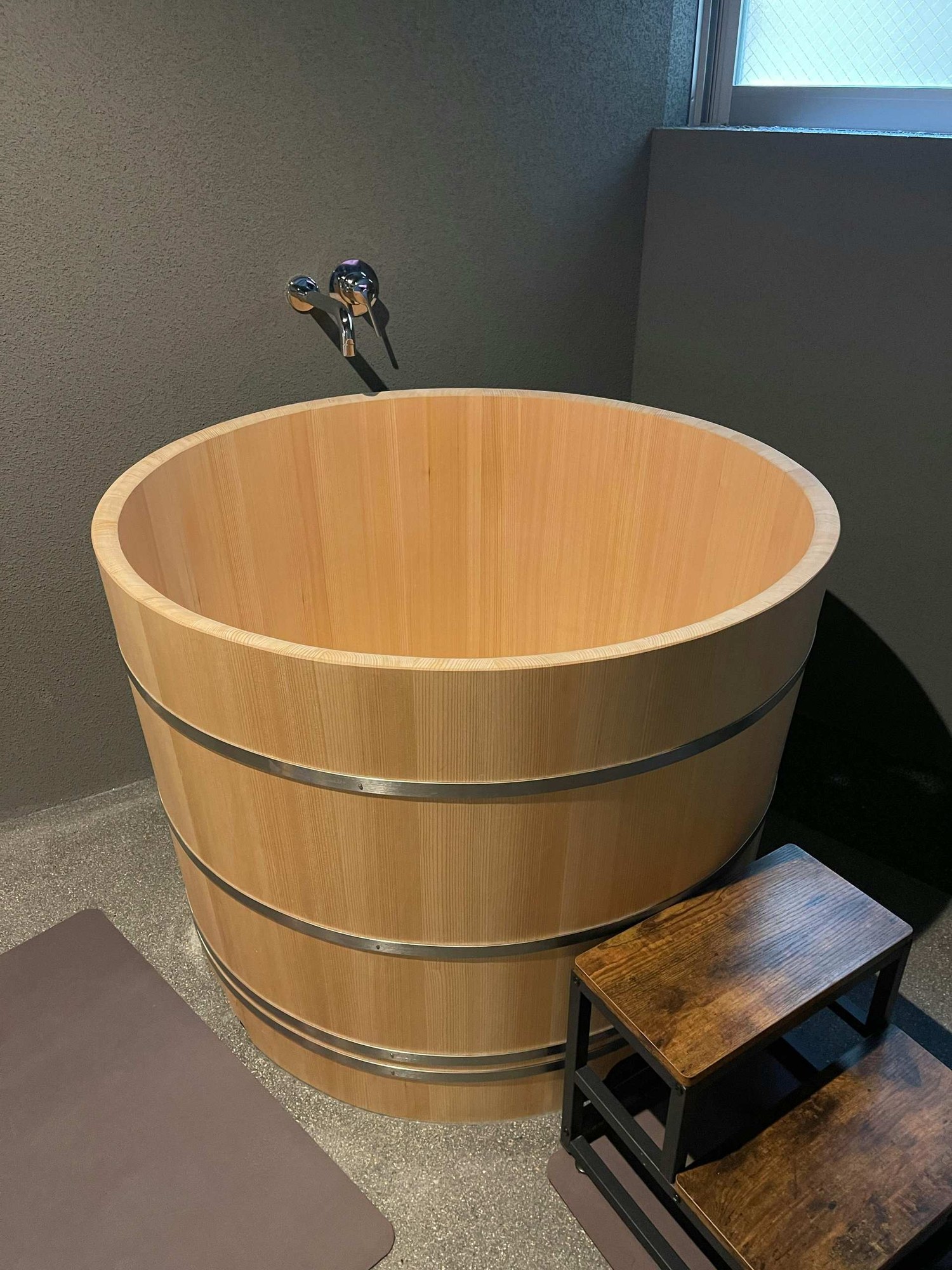
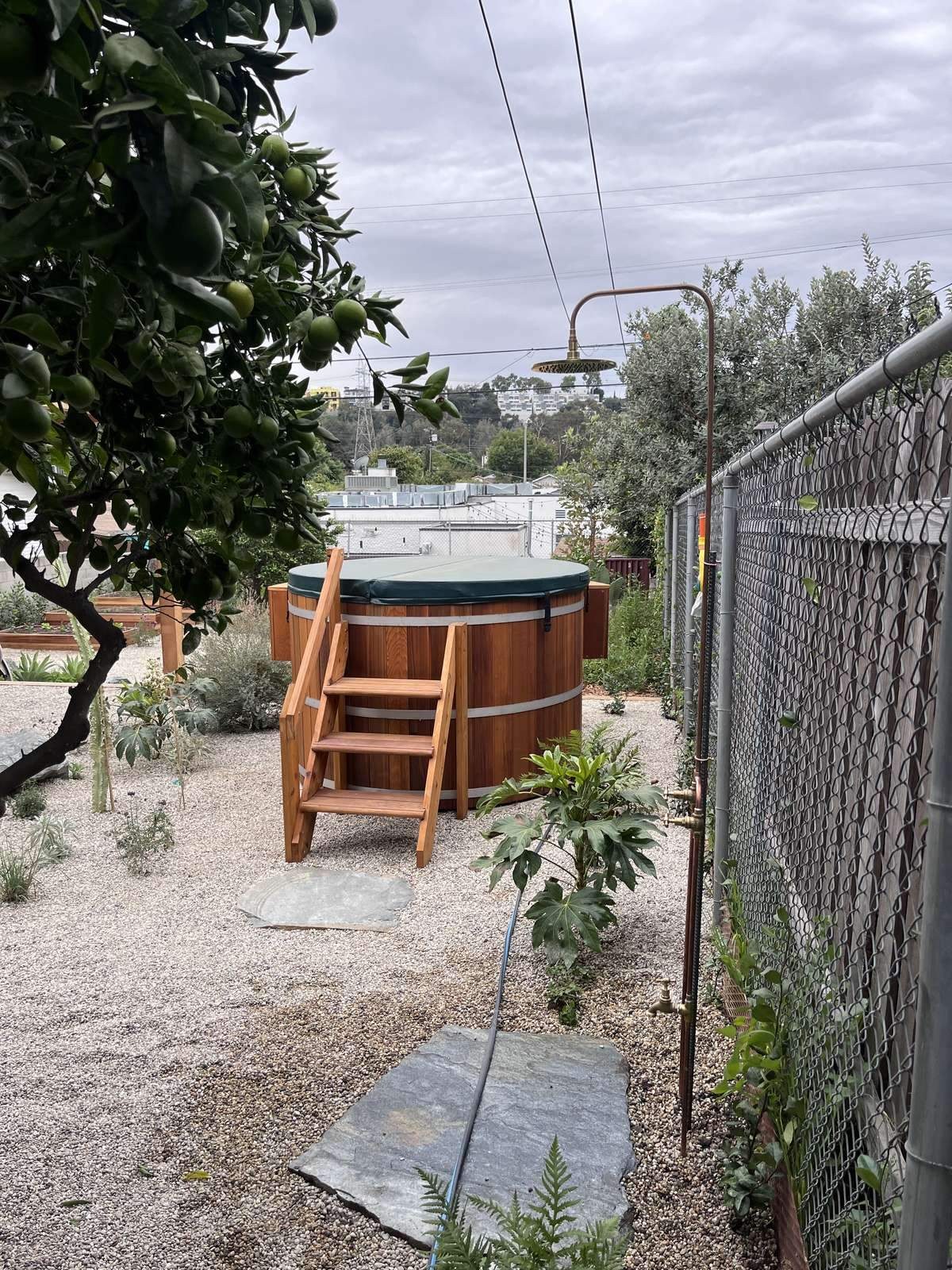
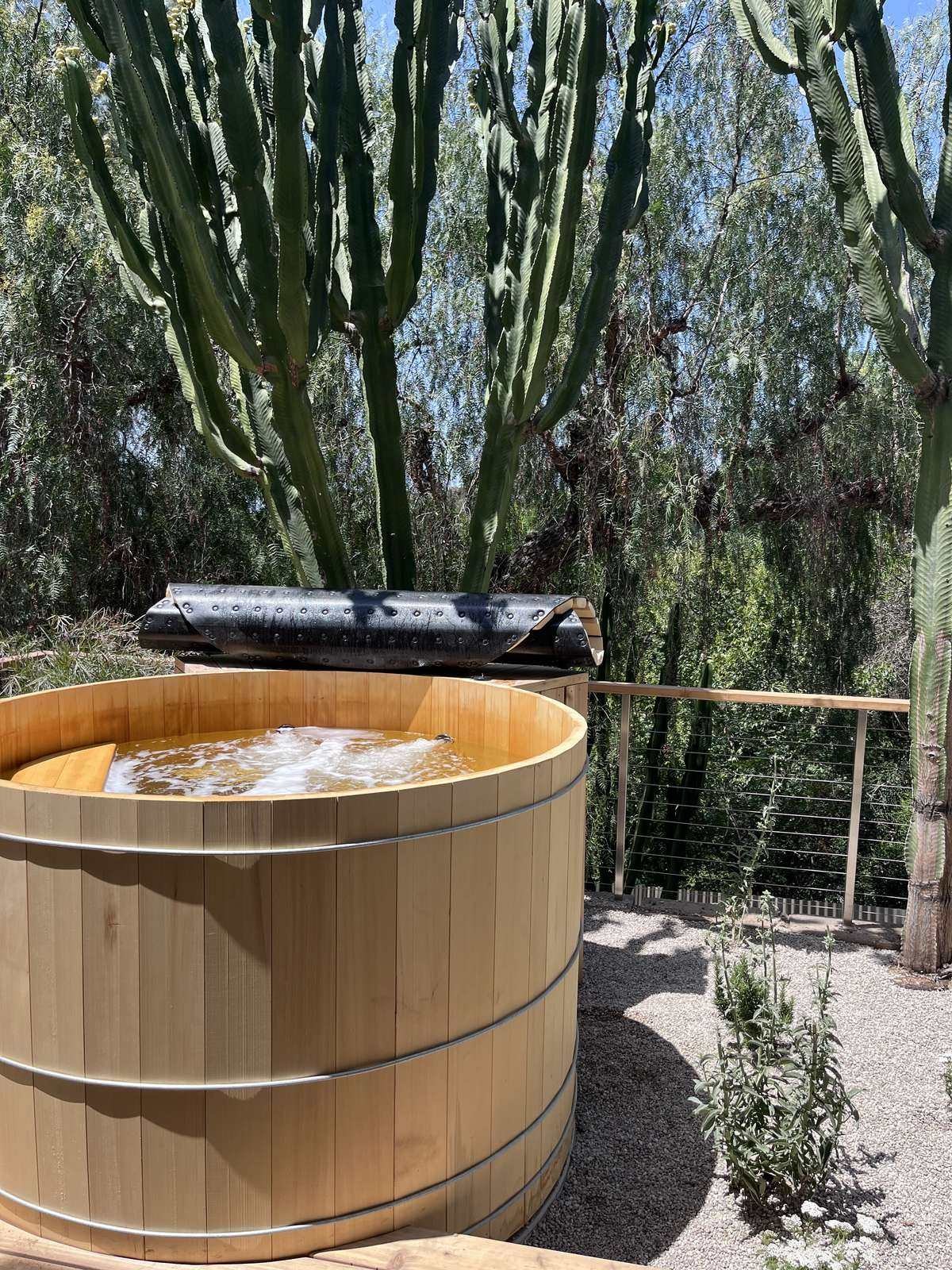
A staved wooden vessel, matching a cedar sauna or tub visually. Beautiful, and it needs the same care around never drying out that any wooden tub does.
Built-in plunges
Set into a deck or a patio and finished in tile, stainless or cedar. The best-looking option and the one that needs the most planning, since it is very hard to change afterwards.
Chillers and heat exchange
Sized in horsepower against volume and target temperature. Some units both chill and heat, which turns one tub into a plunge in summer and a warm soak in winter.
Filtration and sanitation
Cartridge filtration with ozone or UV keeps water clear at low chemical levels. Cold water is kinder to sanitation than hot, which is one of the few things that makes plunges easier than tubs.
Covers and insulation
An insulated cover cuts running cost substantially and keeps debris out. On a chilled tub the cover matters even more than it does on a hot one.
What a cold plunge costs
Installed, cold plunges in Oakland generally run six to twenty-four thousand dollars. Drivers:
- Vessel type, from a freestanding tub up to a tiled built-in plunge.
- Chiller capacity, which follows volume and how cold you want it in August.
- Whether the unit heats as well as chills, which adds cost and a lot of flexibility.
- Electrical work and how far the tub sits from the panel.
- Drainage, which is simple on flat ground and involved on a hillside lot.
- Base and structural work, particularly for a built-in plunge or a deck installation.
Planned alongside a sauna, the shared groundwork makes the pair cheaper than two separate jobs, which is why we usually quote them together. See sauna installation for the hot side, traditional saunas if you want stones and steam, and outdoor saunas for the full backyard setup.
Frequently Asked Questions
How cold does a cold plunge get?
Most people settle between 45 and 55 degrees. Chillers can generally hold down to around 39 depending on the unit and the volume. What matters more than the minimum is whether the chiller can hold your target on a hot afternoon with the tub in the sun, which is exactly what undersized systems fail to do.
How much does a cold plunge cost to run?
Ten to thirty dollars a month in electricity for a well-insulated tub with a correctly sized chiller and a cover that gets used. Poor insulation or no cover can multiply that several times over, which is why we spend so much time on those two things at install.
How often does the water need changing?
Every four to eight weeks with proper filtration and ozone or UV, and longer if the tub is used by one or two people and always covered. Cold water grows far less than hot water does, so plunges are genuinely lower maintenance than a hot tub. Rinse before getting in and the interval stretches further.
Can a cold plunge go indoors?
Yes, and it needs more planning than an outdoor one. The room needs a floor drain or a plan for water, ventilation for the condensation that forms on a cold vessel in a warm room, and somewhere for the chiller that has airflow and will not put its noise into the house. Basements and garages usually work well. Finished interior rooms usually do not.
See all FAQs on our FAQ page.
Planning cold plunge install in Oakland?
Tell us about your space and we will send you a free written estimate. No pressure and no obligation. Fill in the form or call us and we will help you work out what fits your room, your panel and your budget.
Or call us now: 510-462-6097