
Oakland · Sauna Builder Services
Traditional Saunas
Finnish-style hot rooms with stones, real steam and the enveloping heat that nothing else reproduces.
Traditional Saunas · Oakland
A proper Finnish hot room
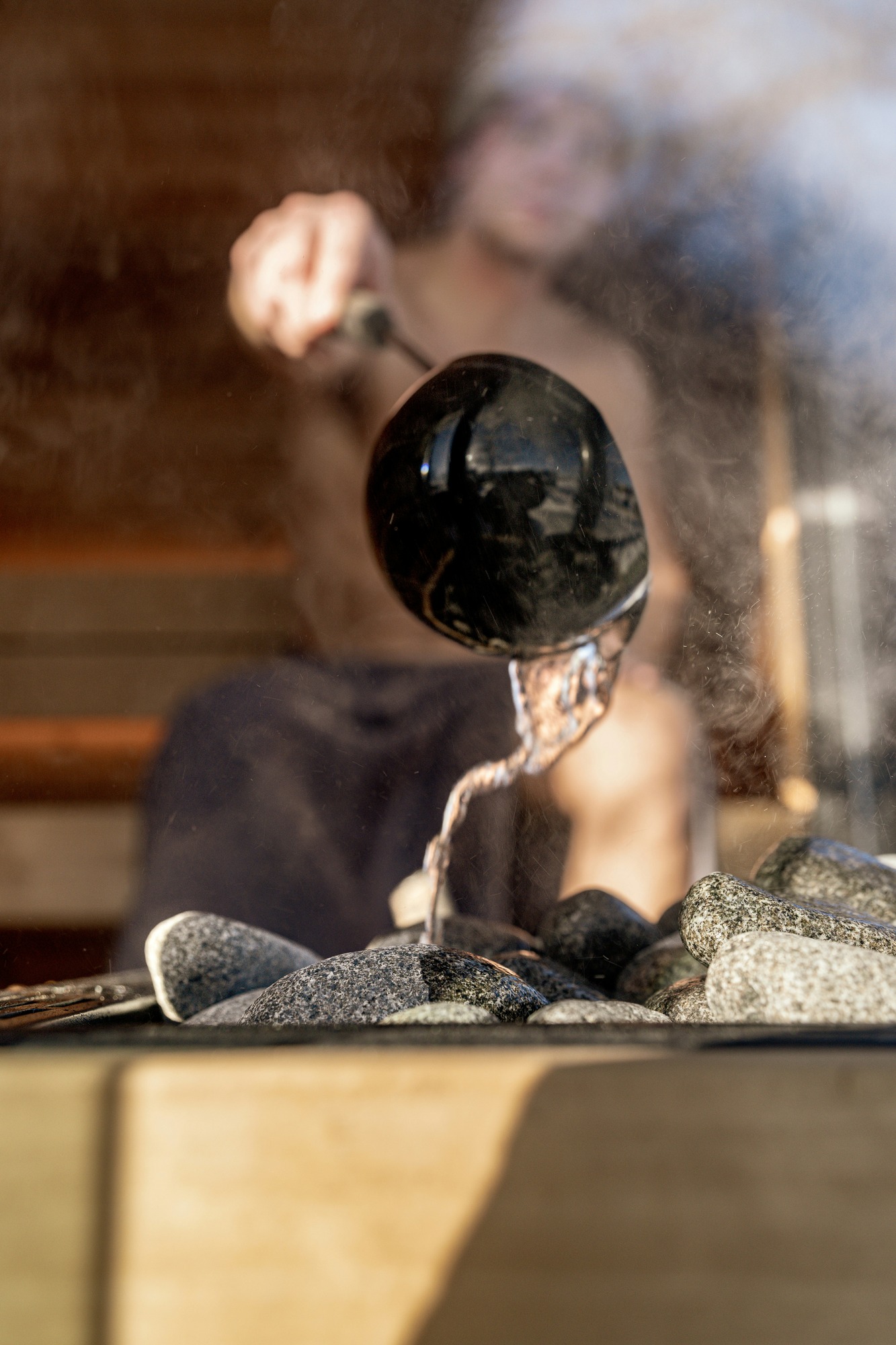
A traditional sauna runs between 170 and 200 degrees with a stove full of stones. You ladle water onto them and the room answers with a wave of steam that the Finns call löyly. That single moment is the reason traditional saunas have outlasted every fashion in home wellness, and it is the thing no infrared cabin can imitate.
Getting it right is mostly invisible work. The stones need mass and the right geometry so they hold heat and release it evenly. The air needs a low intake and a high adjustable exhaust so it moves rather than stratifies. The walls need a sealed vapor barrier with a ventilated cavity behind the paneling so the assembly dries between sessions. Every one of those is decided before the first board goes on.
We build traditional rooms indoors and out across the East Bay, in western red cedar, hemlock, thermo-aspen and Nordic spruce, with electric or wood-fired stoves. If you want the room built from a drawing rather than a template, our custom saunas start there.
Why our traditional rooms feel different
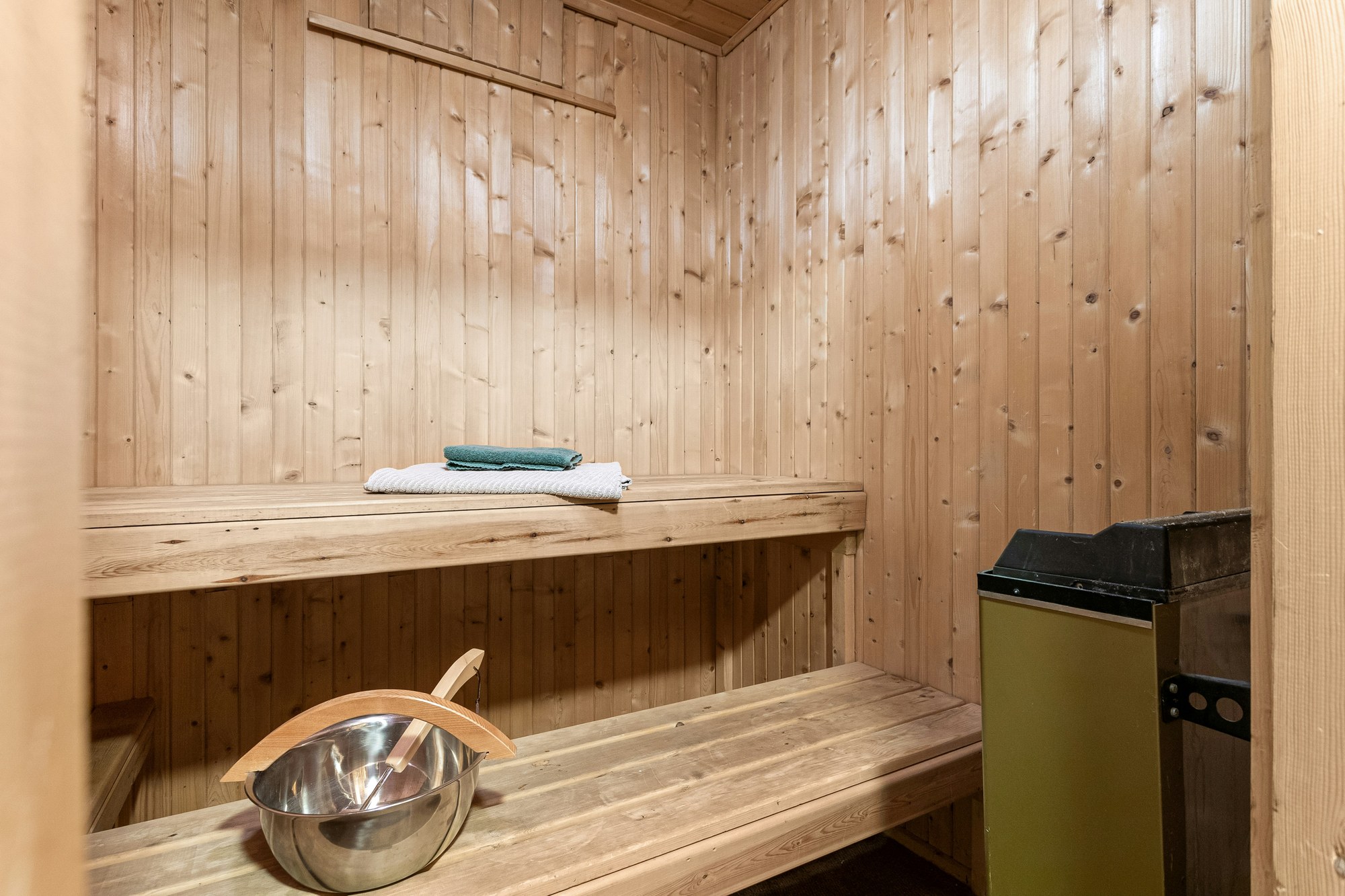
Most disappointing saunas are disappointing for the same two reasons. The heater is too small for the volume, so it never truly recovers after a ladle of water. Or the air does not move, so the top bench bakes while your feet stay cold. We size and vent for the room you actually have, and we test it under load before handing it over.
- Heater output calculated from cubic volume, glass area and wall construction.
- Stone selection and stacking done by hand, since packing them tight kills the steam.
- Low intake and high adjustable exhaust dimensioned into the build, not added later.
- Bench height set against your ceiling so the hot layer sits where you sit.
- Thermo-aspen bench boards available on any build, because they stay cool to bare skin.
- Every room run through a full curing cycle and tested with water on the stones before handover.
Reasons to build traditional
Traditional is the right call in these situations, and we will tell you when it is not.
You want real steam
If the reason you want a sauna is the wave of heat off wet stones, nothing else will do. Infrared does not produce it and steam rooms produce something different. This is the whole argument in one sentence.
More than two people use it together
Traditional rooms scale better socially. Bench tiers let people pick their own heat, and the room holds temperature with the door opening and closing. Infrared cabins are essentially single-occupancy furniture.
You have the electrical capacity
If your panel can carry a dedicated 240V circuit at 30 to 60 amps, traditional is on the table. If it cannot and an upgrade is not worth it, we would point you at infrared saunas instead.
You are building outdoors anyway
Once you are pouring a pad and trenching a circuit, the incremental cost of a traditional stove over infrared panels is small. Outdoors also solves the venting question, since you are not sharing air with the house.
You want it to last decades
A well-built traditional room with a good stove is a thirty-year structure. Electronics-heavy cabins age the way electronics age. That matters if you are treating this as part of the house.
How we build a traditional room
1. Sizing and stove selection
We measure the volume, count the glass, and calculate the heater load. Then we go through stoves with you: electric for simplicity and code ease, wood-fired for the ritual and the smell, hybrid if you want both. In the hills we check the fire severity zone before recommending wood.
2. Seal, vent and wire
Framing, closed-cell insulation and a foil vapor barrier with all seams taped, then furring strips that leave a drying cavity, and intake and exhaust openings cut to size. The circuit runs from the panel on a dedicated breaker, and nothing gets closed up until the inspector signs off.
3. Panel, bench, stones and cure
Paneling, then benches and backrests built in place. The stove goes in and we stack the stones by hand with airflow between them. Then a full curing burn with the door open, followed by a real session with water on the stones so you feel it before we leave.
Traditional sauna details
The choices that decide how a traditional room feels, all of which we will walk through with you.
Electric sauna heaters
Wall-hung and floor-standing units from 4.5kW up to 12kW and beyond. Simple, code-friendly, and the right answer for most indoor rooms and most hills addresses.
Wood-fired stoves
The traditional heat, with the smell and the sound that comes with it. Needs a flue, clearances and, in much of the Oakland hills, a fire zone review with a spark arrestor. Worth it if the ritual is the point.
Stone selection and stacking
Peridotite or olivine diabase, sized and stacked loosely by hand so water reaches the hot core and steam escapes. Packed tight, the same stove makes a fraction of the steam.
Ventilation
Low intake beside or under the heater, high adjustable exhaust on the opposite wall, and a path for make-up air. This is what stops the room feeling stuffy and what dries the wood out afterwards.
Bench and backrest construction
Clear knot-free boards with hidden fasteners, spaced for airflow, on a frame that does not creak. Two tiers minimum in anything above the smallest room, so people can choose their own heat.
Accessories that matter
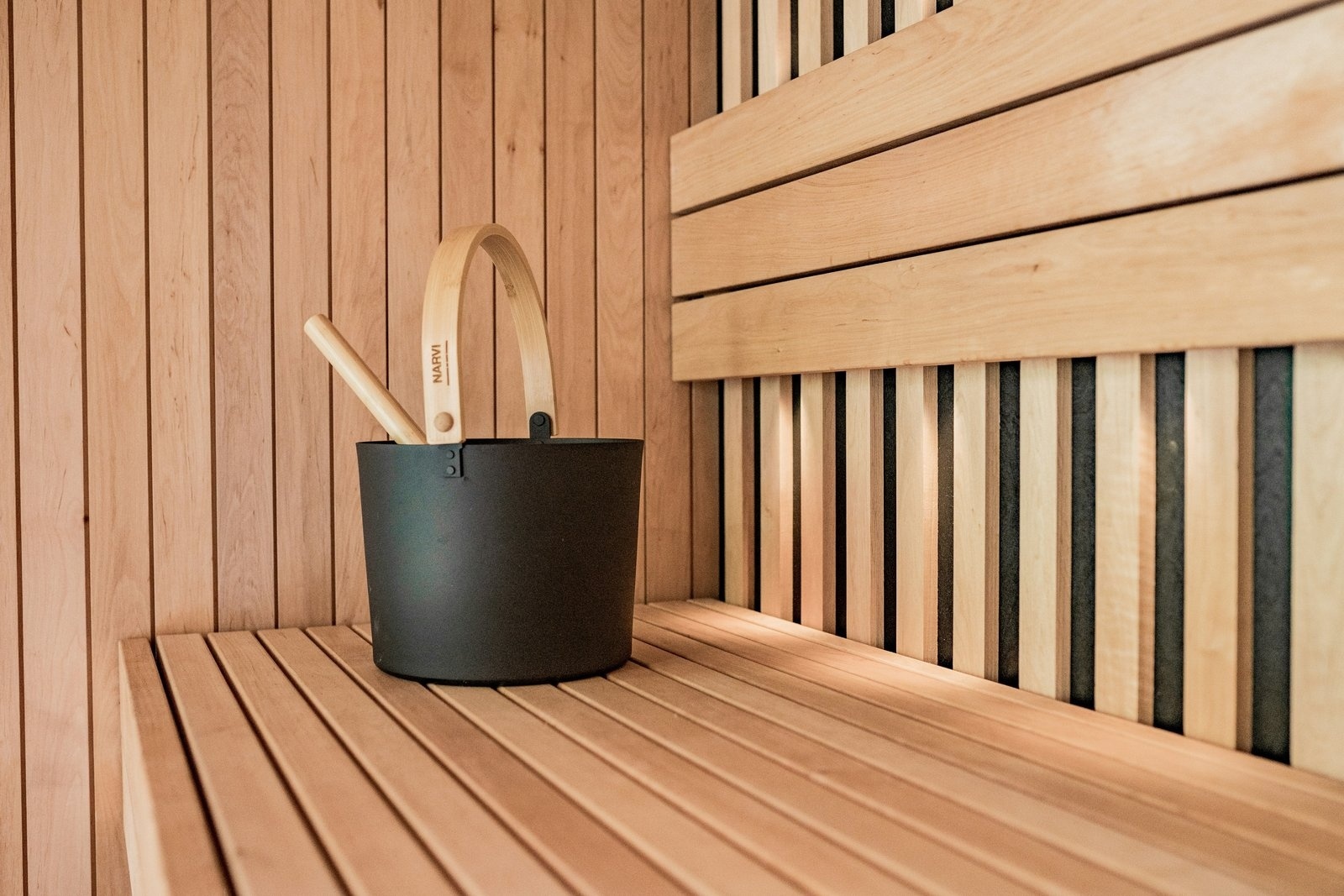
A bucket and ladle, a paired thermometer and hygrometer, a sand timer, a headrest and a duckboard floor. They cost little and go a long way toward getting the room used.
What a traditional sauna costs
Traditional builds in Oakland typically run ten to twenty-six thousand indoors and twenty to forty-five outdoors. The variables:
- Volume, since it sets stove size and paneling quantity together.
- Stove type, with wood-fired adding flue, clearances and possible fire zone review.
- Wood grade, where clear vertical-grain cedar sits far above hemlock.
- Glass area, because a full-glass front needs a bigger stove to hold temperature.
- Electrical, and whether the panel carries the load as it stands.
- Site work outdoors, meaning pad, drainage and a trenched circuit.
We quote fixed price with the stove model named. If the wiring is the obstacle, say so early and we will price an infrared alternative alongside it. A barrel sauna is often the cheapest route to genuine löyly if the yard allows one. Everything we build sits on our services page.
Frequently Asked Questions
How hot does a traditional sauna get?
Between 170 and 200 degrees at bench height, with 175 to 185 being the range most people settle at. Humidity swings from very dry up to short bursts of high humidity when water hits the stones. The top bench runs noticeably hotter than the bottom one, which is the point of having tiers.
How long before a traditional sauna is hot enough to use?
Thirty to forty-five minutes for a properly insulated electric room, longer if it is uninsulated or oversized for its stove. Wood-fired takes forty-five to seventy-five minutes and needs tending. If your room takes ninety minutes, the insulation or the stove sizing is wrong.
Which heater and steam generator brands are the most eco-friendly?
Harvia, Huum, Iki, Narvi and Tylo all make efficient electric units, and several now publish real energy figures rather than vague claims. For steam generators, Mr Steam and Thermasol lead on efficiency and water use. We are approved installers across the major brands and we will recommend on efficiency and serviceability rather than on what carries the best margin.
Can I put a wood-fired sauna in the Oakland hills?
It can be, depending on your exact parcel. Large parts of the hills fall inside the Very High Fire Hazard Severity Zone map, and that adds rules on flue height, spark arrestors, clearance from vegetation and defensible space. We look up your parcel before we suggest wood, and where it will not work, an electric stove gives the same steam with no extra review.
Let's build your sauna
Describe your space and you will get a free estimate in writing, with no pressure and no commitment. Fill out the form or phone us, and we will help work out what suits your room, your electrical panel and your budget.
Or call us now: 510-462-6097